
People often ask me,
“Which SEO blogs do you follow?”
Most people expect me to mention a few popular SEO websites.
But my answer usually surprises them.
Before I read anyone else’s opinion, I prefer reading Google’s own documentation.
That doesn’t mean I ignore SEO blogs.
In fact, I read many blogs written by experienced SEO professionals. I enjoy reading their case studies, experiments, opinions, and real-world experiences. They help me understand what’s happening in today’s SEO industry.
But whenever I want to understand how Google Search actually works, I always go straight to Google’s documentation.
That has been my learning philosophy for over 21 years.
Why Google?
I am from India, and here, SEO almost always means Google Search.
Recent reports show that Google holds around 97% of the search engine market share in India. So when a client asks me to improve their website rankings, they are actually asking me to improve their visibility on Google.
That made me think very early in my career.
If I want to rank websites on Google, shouldn’t I first understand what Google itself recommends?
Why should I depend only on someone else’s interpretation when Google has already explained how Search works?
That simple question changed the way I learned SEO.
Google Became My First SEO Teacher
When I started my SEO journey more than two decades ago, things were very different.
There were no AI tools.
There were very few online SEO courses.
There weren’t hundreds of YouTube channels teaching SEO every day.
Finding reliable information wasn’t easy.
During those days, Google’s own documentation became one of my biggest teachers.
I spent countless hours reading Google’s Webmaster Guidelines (now called Google Search Essentials), Search Central documentation, Search Console Help articles, and many other official resources. Every time Google updated its guidance, I went back and read it again.
Looking back today, I can honestly say,
Google didn’t just become part of my career. It became one of my greatest teachers.
Why I Start With Google’s Documentation
Many people think Google’s documentation is only for developers or technical SEO professionals.
That’s not true.
If you explore Google Search Central, you’ll find detailed guidance covering almost every important SEO topic.
It includes:
- SEO Fundamentals
- Google Search Essentials
- Crawling & Indexing
- Sitemaps
- robots.txt
- Canonicalization
- Structured Data
- Search Appearance
- Image & Video SEO
- JavaScript SEO
- Google Search Console
- Google Trends
- Ecommerce SEO
- International SEO
- Data Analysis and much more.
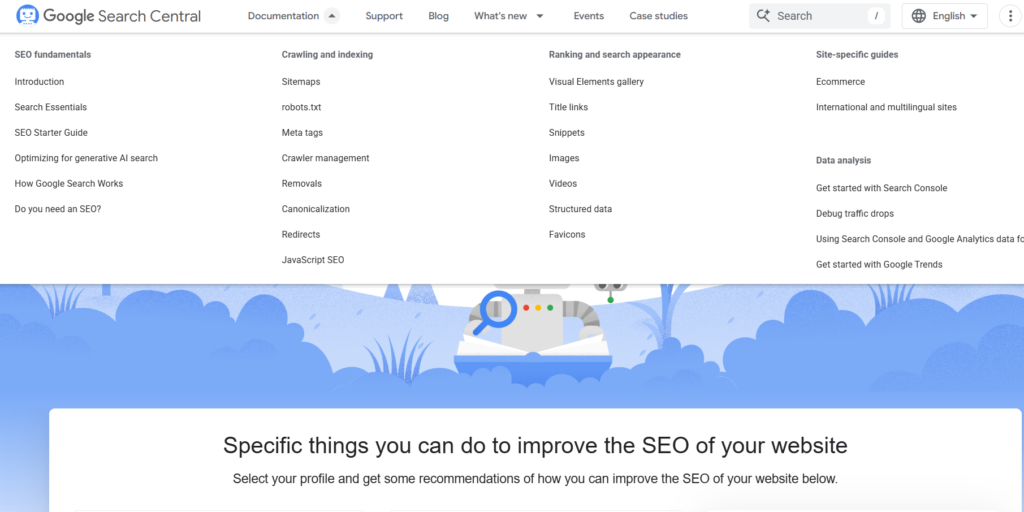
Whenever I have a doubt about how Google recommends handling something, this is usually the first place I visit.
Because I believe a strong SEO foundation starts with understanding Google’s own recommendations.
I Still Watch Google Search Central Videos
Reading documentation is only one part of my learning.
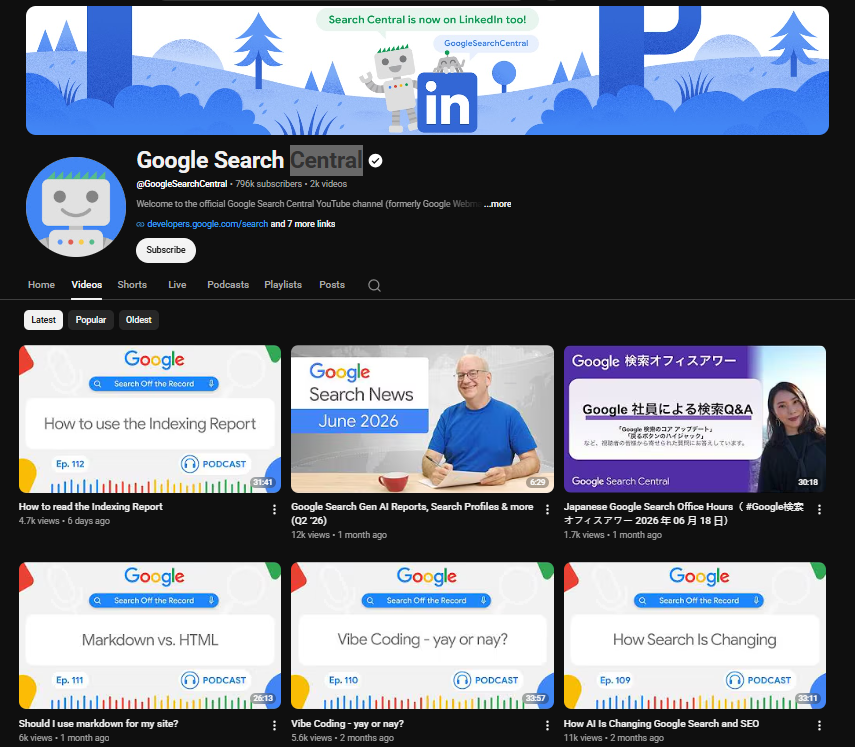
I also regularly watch videos published on the Google Search Central YouTube channel.
Listening to John Mueller, Martin Splitt, Gary Illyes, and other members of Google’s Search team helps me understand how Google thinks about Search.
They explain updates, clarify common SEO misconceptions, discuss new features, and answer real questions from website owners and SEO professionals.
Before them, there was someone many old-school SEO professionals will always remember.
Matt Cutts.
A Person I Learned a Lot From

Image Source: Matt Cutts – www.mattcutts.com
As the former head of Google’s Webspam team, Matt Cutts answered thousands of questions from webmasters around the world through short videos.
I still remember waiting for his videos because every answer came directly from Google.
Many SEO professionals from my generation learned valuable SEO principles from those videos.
Documentation Gives Me the Rules. SEO Blogs Give Me Perspectives.
People sometimes misunderstand my approach.
They think I ignore SEO blogs.
I don’t.
There are many brilliant SEO professionals whose work I genuinely respect.
I read their blogs, watch their videos, and enjoy learning from their case studies and experiences.
They help me understand different perspectives and what’s happening in today’s SEO landscape.
But there is one important difference.
Google’s documentation tells me how Google says Search works.
SEO blogs tell me how experienced professionals interpret, test, and apply those concepts in the real world.
Both are valuable.
But I prefer learning Google’s rules first, then exploring different opinions.
I Stopped Chasing Every Algorithm Update
Like many SEO professionals, I eagerly followed every major Google algorithm update.
I remember reading about updates like Florida, Panda, Penguin, Hummingbird, RankBrain, BERT, Helpful Content Updates, Core Updates, and many more.
Every update created excitement across the SEO community.
Then one day I realised something.
The updates kept changing.
Google’s direction didn’t.
Google has always encouraged website owners to:
- Create helpful content.
- Build trustworthy websites.
- Focus on users instead of search engines.
- Provide a great user experience.
- Solve real problems.
That changed my thinking completely.
Today, I spend less time chasing every algorithm update and more time building websites that genuinely help users.
Interestingly, that’s exactly what Google has been encouraging for years.
I Don’t Follow SEO Blogs Blindly
I often describe myself as an old-school SEO professional.
I still believe in learning directly from Google before following industry opinions.
That doesn’t mean Google’s documentation has every answer.
Real-world SEO also comes from testing, observation, and experience.
That’s why I continue reading SEO blogs and learning from experienced professionals.
They help me see different perspectives.
But I don’t blindly follow every opinion.
After spending more than 21 years in SEO, I have developed my own understanding of Search.
I enjoy learning from everyone.
But when it comes to making decisions for my clients or my own websites, I trust my experience, my testing, and Google’s official guidance.
My Advice to Every Beginner
If you’re just starting your SEO journey, here’s one piece of advice.
Don’t spend months watching random SEO videos or reading hundreds of blogs before understanding the basics.
Start with Google’s own documentation.
Read Google Search Essentials.
Learn how crawling and indexing work.
Understand Search Console.
Explore Structured Data.
Watch Google Search Central videos.
Once you build that strong foundation, every SEO blog you read will make much more sense.
Instead of simply believing someone’s opinion, you’ll understand why they reached that conclusion.
Final Thoughts
Over the last 21 years, I have read countless SEO blogs, watched hundreds of videos, and learned from many talented SEO professionals.
I continue to do so even today.
Their experiences challenge my thinking, inspire me, and help me stay updated with the industry.
But whenever I feel confused…
Whenever I want to separate facts from opinions…
Whenever I want to understand how Google Search really works…
I always return to the same place.
Google’s own documentation.
Because trends change.
Opinions change.
Algorithms evolve.
But one habit has remained the same throughout my SEO journey.
Before I believe anyone else’s opinion, I ask one simple question.
“What does Google say about this?”
That’s where I begin.
That’s where I have always begun.
And after more than 21 years in SEO, I still believe it is the strongest foundation any SEO professional can have.