
A Simple Observation That Changed the Way I Think About Search
Last week, I opened Google Keyword Planner.
Not for a client.
Not for keyword research.
And definitely not because I was planning to write another blog.
I was simply curious.
I wanted to know one thing.
How many people are searching for ChatGPT on Google every month?
When the search volumes appeared on my screen, I stopped scrolling for a moment.
The numbers were much higher than I expected.
But surprisingly, it wasn’t the search volume that caught my attention.
It was a simple question that immediately came to my mind.
If AI is replacing Google, why are millions of people still using Google to search for ChatGPT?
That one question became the reason for writing this article.
The Screenshot That Started This Thought
Like many digital marketers, I regularly use Google Keyword Planner to understand what people are searching for.
Usually, I’m looking for keyword ideas for SEO or Google Ads campaigns.
This time was different.
I searched for a few AI platforms that almost everyone is talking about today.
- ChatGPT
- Google Gemini
- Claude
- Perplexity
I expected decent search volume.
After all, AI has become part of our daily conversations.
But seeing millions of Google searches for these platforms made me pause.
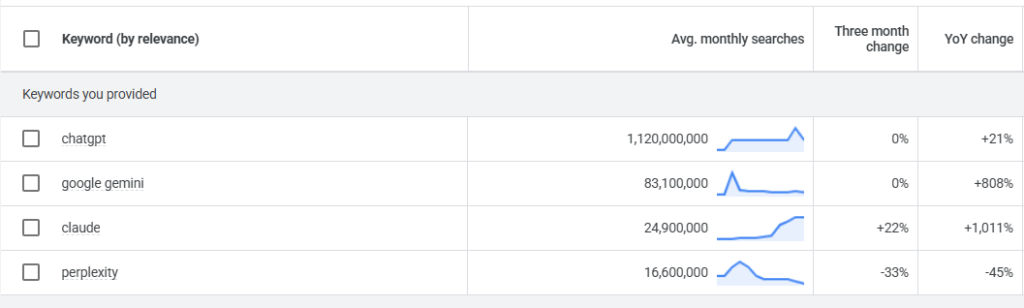
This screenshot didn’t give me all the answers.
Instead, it gave me a much better question.
Why are people still searching Google for ChatGPT?
The more I thought about it, the more I realised this article wasn’t really about ChatGPT.
It was about understanding how people search today.
Sometimes Data Tells a Different Story
For the last few months, we’ve all been hearing similar statements.
“AI is replacing Google.”
“People don’t use search engines anymore.”
“SEO is dead.”
I’m not saying these opinions are completely wrong.
In fact, I use ChatGPT almost every day, and I genuinely believe AI has changed the way we search for information.
But one thing I’ve learnt during my 21 years in Digital Marketing is this.
Whenever everyone is saying the same thing, I like to look at the data first.
Sometimes, the data supports popular opinion.
Sometimes, it challenges it.
This was one of those moments.
Google Keyword Planner was showing that millions of searches were still happening for ChatGPT, Gemini and other AI platforms.
That made me think.
Maybe people aren’t abandoning Google.
Maybe they’re simply using it differently.
There is a big difference between those two ideas.
Then I Started Observing People Around Me
After looking at the Keyword Planner data, I stopped thinking about keywords.
Instead, I started observing people.
I asked a few friends and colleagues a simple question.
“How do you usually open ChatGPT?”
The answers were interesting.
Some said,
“I just search ChatGPT on Google.”
Some said,
“I have the app installed.”
Others said,
“I type chatgpt.com directly.”
None of these answers surprised me.
But together, they made me realise something.
There isn’t a single way people reach ChatGPT.
Everyone has their own habit.
And maybe that’s exactly what has changed.
The journey has become different for different people.
Now Think About Your Own Behaviour
Before reading further, I want you to stop for a minute and think about your own habits.
The first time you wanted to use ChatGPT…
What did you do?
Did you type chatgpt.com directly into your browser?
Or did you simply open Google and search for “ChatGPT”?
If you’re like many people I know, there’s a good chance you searched Google first.
Not because you didn’t know the website.
Not because it was difficult to type.
Simply because that’s how we’ve been using the internet for years.
Think about it.
How many times have you searched Google for:
- Amazon
- Flipkart
- Gmail
- YouTube
- WhatsApp Web
- SBI Net Banking
- IRCTC
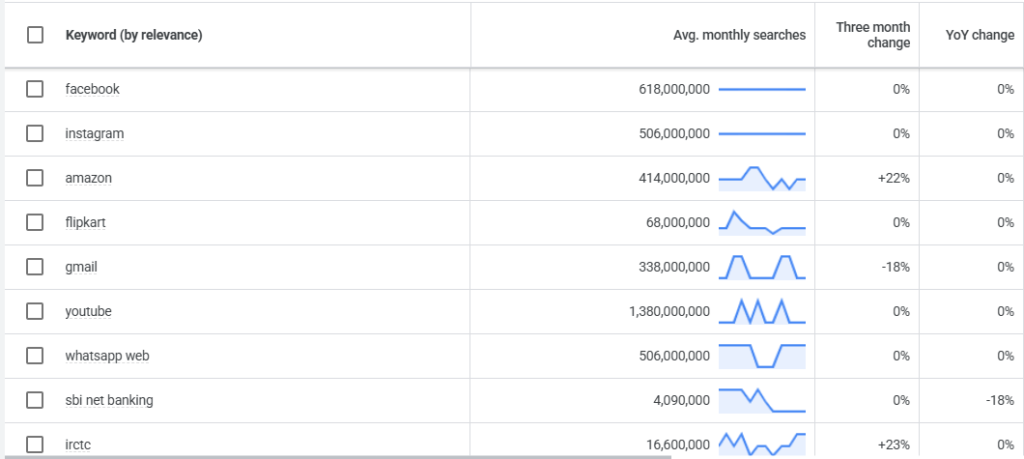
You probably know these websites.
You may even have their mobile apps installed.
Still, many of us search Google before opening them.
Why?
I don’t think it’s because we’ve forgotten the website address.
I think it’s because Google has become a habit.
For nearly two decades, Google has been the place where we start almost every online journey.
That habit doesn’t disappear overnight.
Google Is No Longer Just a Search Engine
This is probably the biggest takeaway from my observation.
Earlier, I used to think of Google as a place where people searched for answers.
Today, I think it has become much more than that.
Google is slowly becoming the front door of the internet.
When we want information…
We search Google.
When we want to buy something…
We search Google.
When we want to visit a company’s website…
We search Google.
Even when we already know where we want to go…
Many of us still search Google.
That’s an interesting behavioural change.
Maybe Google is no longer just helping people discover information.
Maybe it’s helping people navigate the internet itself.
And I think that’s a completely different way of looking at search.
Information Search and Navigation Search
While thinking about all this, I realised something that doesn’t get discussed often.
Not every Google search is the same.
Some searches are made to find information.
Others are simply made to reach a destination.
Let’s look at a few examples.
Information Search
These are searches where people genuinely want answers.
- What is AI?
- How does ChatGPT work?
- Best digital marketing strategies
- What is SEO?
- Best places to visit in Hyderabad
The goal here is simple.
The user wants information.
Whether that information comes from Google, ChatGPT, Gemini or another AI platform doesn’t matter much.
The user simply wants the best answer.
Now let’s look at another type of search.
Navigation Search
These searches look completely different.
- ChatGPT
- Amazon
- Gmail
- YouTube
- Flipkart
In these cases, people usually know where they want to go.
They’re not looking for information.
They’re looking for the website or the app.
Google is simply helping them reach their destination.
This is called navigation search.
And I personally feel this type of search is becoming more important than many of us realise.
Because if millions of people are still searching Google just to reach ChatGPT…
Then maybe the conversation shouldn’t be about Google vs ChatGPT.
Maybe it should be about how Google and AI are becoming part of the same user journey.
Is It Really Google vs ChatGPT?
After thinking about this for a few days, I realised something.
Maybe we’re asking the wrong question.
Almost every discussion today is about Google vs ChatGPT.
Which one is better?
Which one will survive?
Which one will replace the other?
Honestly…
I don’t think that’s the right way to look at it.
Because when I observe my own behaviour, I don’t choose one over the other.
I use both.
Sometimes within a few minutes.
For example, if I want to understand a new concept, I’ll ask ChatGPT.
If I want ideas for a blog, I’ll ask ChatGPT.
If I want help writing or summarising something, ChatGPT is usually my first choice.
But my journey doesn’t end there.
I often open Google immediately afterwards.
I search for the official website.
I read reviews.
I compare different opinions.
I verify the information.
Only then do I make a decision.
That made me realise something.
ChatGPT helps me understand.
Google helps me verify.
Both are useful.
Both have a role to play.
AI Has Changed Search… But Not Every Search
I don’t think anyone can deny that AI has changed the way we search for information.
A few years ago, if I wanted to learn about a topic, I would open Google.
Visit three or four websites.
Read different articles.
Compare the information.
And then make my own notes.
Today, I can ask ChatGPT the same question and get a clear answer within seconds.
That is a huge improvement.
It saves time.
It makes learning easier.
It helps us become more productive.
But something interesting happens when money gets involved.
Let’s say I’m planning to buy a laptop.
ChatGPT may recommend a few good models.
But I won’t place an order immediately.
I’ll still visit Amazon.
I’ll compare prices.
I’ll read customer reviews.
I’ll watch YouTube videos.
I’ll check the manufacturer’s website.
Only after doing all this will I make my decision.
The same happens when I’m searching for:
- A real estate project
- A digital marketing agency
- A hospital
- A school
- A pest control company
- A travel package
AI helps me shortlist.
Google helps me research.
The business website helps me build confidence.
And finally, I make a decision.
That’s why I don’t believe AI has replaced search.
I believe it has changed the way people search.
One Question I Still Don’t Have an Answer To
While writing this article, another question kept coming back to my mind.
In fact…
I still don’t have the answer.
Google Keyword Planner tells us that millions of people search for ChatGPT every month.
But it doesn’t tell us something even more interesting.
How many of those people already have the ChatGPT app installed on their phones?
Think about it.
If the ChatGPT app is already installed…
Why search for “ChatGPT” on Google?
Why not simply tap the app icon?
The same question applies to many other apps.
Facebook.
Instagram.
Amazon.
YouTube.
Almost every smartphone already has these apps installed.
Yet they continue to receive millions of branded searches on Google every month.
That genuinely made me curious.
What Could Be Happening?
I don’t know the exact answer.
And I don’t want to pretend that I do.
But I can think of a few possibilities.
Some people may be using desktops or laptops where they naturally access these platforms through a browser.
Some users may not have the app installed.
Some might be using a new phone.
Others may be using someone else’s device.
And then there are people who simply use Google out of habit.
I’m one of them.
Even when I know the website.
Even when I’ve visited it hundreds of times.
Sometimes I still open Google and search for the brand name.
Not because I have to.
Simply because it feels natural.
I wouldn’t be surprised if millions of other users behave in the same way.
But I also know that millions of people probably open the app directly without touching Google.
And that’s perfectly normal too.
The interesting part isn’t deciding which behaviour is right.
The interesting part is understanding that both behaviours exist.
Data Shows Us What Happens… Not Why
This is something I remind myself whenever I look at search data.
Google Keyword Planner is an excellent tool.
It tells us what people searched for.
It tells us how popular a keyword is.
It tells us how search trends change over time.
But it doesn’t tell us the reason behind every search.
It doesn’t tell us:
- Whether the user already had the app installed.
- Whether they searched from a desktop or a mobile phone.
- Whether they were looking for the website or downloading the app.
- Whether they were new users or existing users.
And honestly…
That’s okay.
Sometimes, data gives us answers.
Sometimes, it simply gives us better questions.
This article is based on one of those questions.
Maybe Search Behaviour Is More Complex Than We Think
As digital marketers, we often become obsessed with numbers.
Search volume.
Clicks.
CTR.
Traffic.
Conversions.
These metrics are important.
But sometimes we forget the person behind the search.
Two people can type exactly the same keyword.
“ChatGPT”
But their intentions may be completely different.
One person may have heard about ChatGPT for the first time.
Another person may simply want to open the website.
Someone else may be trying to compare ChatGPT with Gemini.
Another user may be looking to download the mobile app.
The keyword is the same.
The user journey is completely different.
That reminded me of something I’ve learnt over the years.
Understanding search intent is becoming more important than understanding search volume.
Because numbers tell us how many people searched.
Intent tells us why they searched.
And if we don’t understand the “why,” we may end up drawing the wrong conclusions from the data.
Maybe Google’s Role Is Changing, Not Disappearing
After spending a few days thinking about this topic, I reached a simple conclusion.
I don’t think Google is losing its importance.
I think its responsibility is changing.
Years ago, Google’s job was mainly to help us find information.
Today, it does much more.
It helps us discover businesses.
It helps us compare products.
It helps us read reviews.
It helps us find directions.
It helps us reach websites.
And sometimes…
It even helps us reach ChatGPT.
Maybe that’s why the Keyword Planner numbers surprised me so much.
Because they reminded me that people don’t suddenly change habits just because a new technology arrives.
Technology changes quickly.
Human behaviour changes slowly.
And I think that’s one of the biggest lessons this observation has taught me.
What Does This Mean for Businesses?
After spending a few days thinking about this observation, I kept asking myself one question.
If people are using Google and AI together, what should businesses do?
Should they stop investing in SEO?
Should they focus only on AI?
Should they ignore Google because ChatGPT is becoming popular?
Personally…
I don’t think any of these are the right approach.
In fact, I believe businesses should now focus on something much bigger than rankings.
Trust.
Let’s take a simple example.
Suppose someone asks ChatGPT,
“Can you suggest a good digital marketing agency in Hyderabad?”
ChatGPT may recommend a few names.
But will the customer contact the first company immediately?
Probably not.
Most people will still visit the company’s website.
They’ll check Google Reviews.
They’ll browse through the services.
They’ll look at testimonials.
They’ll compare a few more companies.
Only then will they make a decision.
The same happens when buying an apartment.
Choosing a hospital.
Selecting a school.
Booking a travel package.
Or even hiring a pest control company.
AI may help customers discover your business.
But your website, your reviews, your content and your online reputation help them trust your business.
That’s why I don’t believe websites are becoming less important.
I actually think they’re becoming more important.
SEO Is Changing. So Should We.
One sentence I’ve been hearing for years is,
“SEO is dead.”
I heard it when social media became popular.
I heard it when mobile phones changed browsing habits.
I heard it again when voice search became popular.
And now I’m hearing the same thing because of AI.
My answer hasn’t changed.
SEO isn’t dead. It’s evolving.
Earlier, SEO was mainly about keywords.
Then it became about user experience.
Later it became about mobile-first websites.
Today, it’s also about creating content that AI platforms can understand and trust.
The tools have changed.
The algorithms have changed.
But the goal is still the same.
Help people find useful and reliable information.
Whether someone finds your business through Google Search, ChatGPT, Gemini or another AI platform in the future, one thing will always matter.
Can they trust you?
My Observation
When I started writing this article, I thought I was writing about Google Search.
Halfway through, I realised I was actually writing about human behaviour.
Technology changes very quickly.
People don’t.
For nearly twenty years, many of us have started our online journey with Google.
That habit doesn’t disappear overnight just because a new technology arrives.
Some people now start with ChatGPT.
Some still start with Google.
Many use both.
And I honestly believe that number will continue to grow.
That’s why I don’t see this as Google vs ChatGPT.
I see it as Google and ChatGPT.
Different tools.
Different strengths.
One user journey.
My Final Thoughts
This article started with a simple question.
Why are millions of people still searching Google for ChatGPT?
I still don’t have a perfect answer.
And I’m completely okay with that.
Because sometimes the value isn’t in finding an answer.
Sometimes the value is in asking a better question.
That’s exactly what this observation taught me.
As digital marketers, we spend a lot of time studying algorithms.
Maybe we should spend a little more time studying people.
Because platforms will continue to change.
Google will evolve.
AI will evolve.
New technologies will replace old ones.
But understanding how people think, search and make decisions will always be more valuable than understanding any algorithm.
That’s the lesson I’m taking away from this small observation.
And I have a feeling this is only the beginning.
Five years from now, our search habits may look completely different again.
When that happens, I’ll probably come back to this article, smile, and write another one about what changed next.
Before I End…
Everything I’ve shared here is based on my personal observation after working in Digital Marketing for more than 21 years.
I’m not trying to prove that Google is better than ChatGPT.
Nor am I trying to prove the opposite.
I’m simply sharing something that genuinely made me stop and think.
If you’re a business owner, marketer or someone interested in how people use technology, I encourage you to do the same.
Observe.
Ask questions.
Challenge assumptions.
Sometimes, one small observation can completely change the way you look at a much bigger picture.
That’s exactly what happened to me.
And that’s why I felt this thought was worth sharing.
One Last Question…
When you want to use ChatGPT…
What do you do first?
- Do you search for “ChatGPT” on Google?
- Or do you open the app directly?
There is no right or wrong answer.
I’m simply curious.
Because your answer might help me understand search behaviour even better.
If you have a different observation or opinion, I’d genuinely love to hear it.
After all, that’s how we learn.